Analog circuit design
Complete schematic design with component selection optimized for noise, offset, and temperature stability.
I design low-noise, high-accuracy analog circuits for audio, biomedical, and sensor applications, and I confirm the performance on the bench before you commit to a production run.
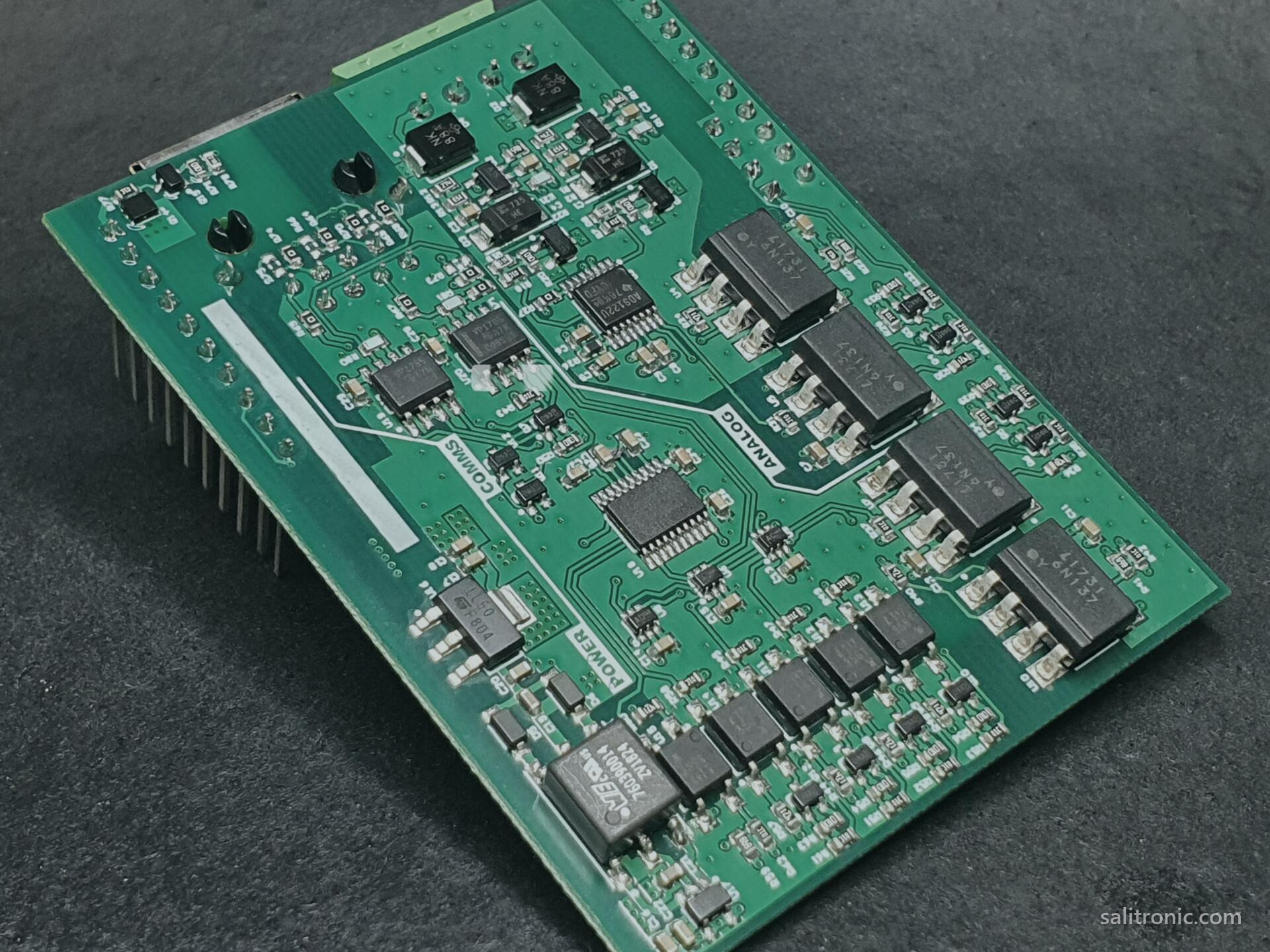
Analog design asks for a different mindset than digital work. Every component choice, every trace routing decision, and every power supply characteristic affects performance. Noise, offset, drift, and distortion are constant adversaries that have to be understood and controlled through careful design. Proper analog-to-digital separation is what lets a precision front end reach its full potential even on a board crowded with microcontrollers and digital logic. This is where precision analog design and low-noise front-end work matter most: a mixed-signal PCB where grounding, shielding, and layout decide whether microvolt-level signals survive next to the digital switching.
From high-fidelity audio to biomedical acquisition and industrial sensor interfaces, each engagement is delivered as a complete, verified package.
Complete schematic design with component selection optimized for noise, offset, and temperature stability.
SPICE analysis including AC response, transient behavior, noise analysis, and Monte Carlo tolerance studies.
Detailed placement and routing constraints for achieving specified analog performance.
Low-noise power regulation with proper filtering and sequencing for analog sections.
Documented test methods for verifying analog performance in production.
Where needed, methods for calibrating offset, gain, and other parameters.
Measured results from the prototype demonstrating specified performance.
Professional analog design prevents these common circuit issues before they reach the bench.
Multiple ground paths creating noise pickup and offset errors.
Digital switching noise contaminating analog supplies.
Components with poor temperature coefficients causing measurement errors.
Wrong resistor values causing offset errors with high-impedance sources.
Aliasing in sampled systems or insufficient anti-aliasing protection.
Unshielded analog front ends picking up external interference.
I define the performance targets with you: noise floor, bandwidth, accuracy, dynamic range, and environmental conditions, then identify the toughest specifications driving the design.
I choose the circuit topology that fits the requirements, weigh the trade-offs between different approaches, and settle on the most robust solution.
I select amplifiers, references, and passives with specifications that meet the performance goals, accounting for noise, offset, drift, and availability.
Detailed SPICE simulation verifies performance and optimizes component values, and Monte Carlo analysis confirms the design meets spec across component tolerances.
Critical PCB layout with attention to grounding, shielding, and placement, followed by prototype testing that validates the simulation results.

An electronics design engineer with 20+ years of professional experience across analog, digital, RF, and power designs, delivered to clients in 15+ countries. Your project is handled by the person who has shipped hardware like it, start to finish.
See the project portfolioPrecision and low-noise analog: sensor front ends and signal conditioning, biomedical and instrumentation amplifiers, audio, and the analog sections of mixed-signal boards. The focus is on noise, accuracy and clean analog-to-digital separation.
It starts at the schematic with the right topology, reference and part selection, and continues in layout with careful grounding, return paths and analog-digital partitioning. I verify the result on the bench with real measurements, not only simulation.
Yes. I often handle the analog front end while the digital or firmware is done in house or by your team, and I make sure the two sides coexist without the digital noise corrupting the measurement.
I take it through to a tested prototype in my own lab whenever possible, so the analog performance is measured and confirmed before you commit to a production run.
Yes. Precision analog design and low-noise front-end work, instrumentation amplifiers, careful reference and filter design, and the grounding and shielding of a mixed-signal PCB, are a core focus, so small signals stay clean alongside the digital section of the board.
Whether you are measuring microvolts or processing audio, tell me what the signal is and the accuracy you need, and I will design the front end to deliver it.
Start the Conversation