Power stage design
Gate driver circuits, MOSFET or IGBT selection, and protection features sized for your motor and application.
I design the power stage and the control firmware together for BLDC and AC motors, so your drive spins smoothly and efficiently as the load changes, not just at idle.
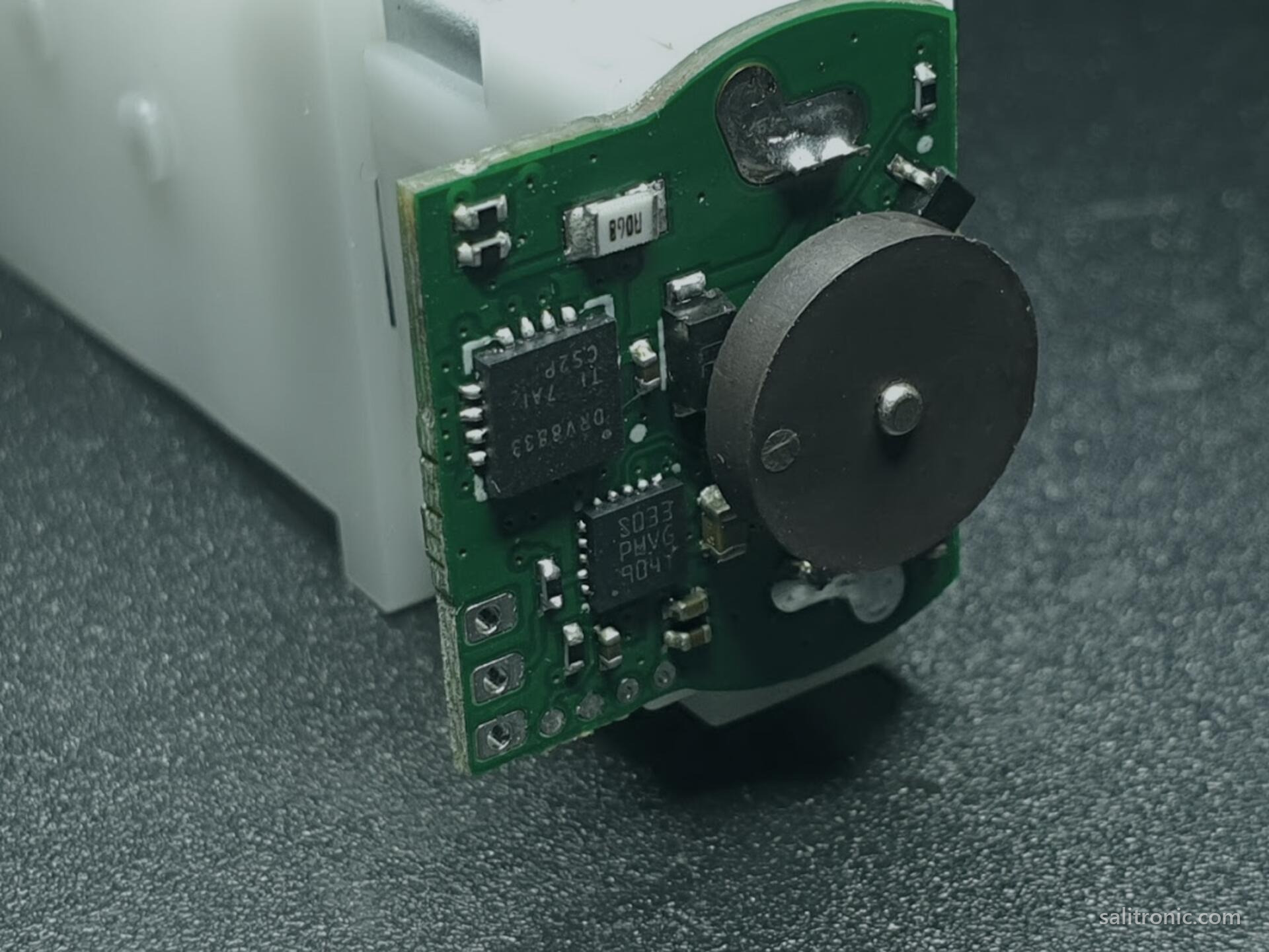
Motor control is where power electronics meets real-time control. I pair Field-Oriented Control and sensorless techniques with carefully designed hardware so torque stays smooth, efficiency stays high, and the drive holds up as the load changes. Where it fits, sensorless control drops the Hall sensors and encoders, cutting cost and improving reliability without giving up performance. Every application is different, so the control strategy and hardware are tailored to what your motor and product actually need. This covers BLDC motor controller design with field-oriented control (FOC), sensorless or sensored, including VESC-based designs where the gate drive, current sensing, and thermal path all have to survive real stall and startup currents.
Gate driver circuits, MOSFET or IGBT selection, and protection features sized for your motor and application.
FOC, sensorless, or another control strategy implemented and tuned for your specific motor.
Accurate phase current measurement using shunt resistors or current sensors.
Hall sensor interface, encoder interface, or a sensorless observer implementation.
Overcurrent, overtemperature, overvoltage, and stall detection.
A documented process for tuning control loops across different motors.
Measured performance data including efficiency, torque ripple, and dynamic response.
Vibration and acoustic noise from improper commutation timing or control.
Inability to start under load or in certain rotor positions.
Observer instability at low speeds or under rapidly changing loads.
MOSFETs or motor windings overheating under sustained operation.
Conducted and radiated emissions from fast switching edges.
Poor control leading to excessive losses and reduced battery life.
I measure or obtain motor parameters: resistance, inductance, back-EMF constant, and mechanical characteristics. These parameters drive the control design.
I select the control approach for your requirements: trapezoidal, sinusoidal, FOC, or DTC, and determine the sensor requirements or sensorless feasibility.
I design gate drivers, power stage, and current sensing, selecting components based on voltage, current, and thermal requirements.
I implement the control algorithms on an appropriate microcontroller, then design and tune current loops, speed loops, and any sensorless observers.
I integrate the motor control with your system-level requirements, test under all operating conditions, and verify the protection features.

An electronics design engineer with 20+ years of professional experience across analog, digital, RF, and power designs, delivered to clients in 15+ countries. Your project is handled by the person who has shipped hardware like it, start to finish.
See the project portfolioBLDC and AC motors with field-oriented control, sensorless control, direct torque control and space vector modulation, for smooth and efficient operation.
Yes. The gate drive, current sensing, protection and the control firmware are designed as one system, because motor control lives or dies on how well those parts work together.
I prefer to deliver the full package including the control firmware, but it is fine if your team or another engineer owns the firmware and I provide the hardware and bring-up.
Yes. I bring the drive up on the bench and test it with the actual motor and load before it goes anywhere near production.
Yes. BLDC motor controller design with field-oriented control (FOC), in sensored or sensorless form, is core work: gate drivers, phase current sensing, protection, and the thermal path are sized for the real stall and startup currents rather than the datasheet ideal. VESC-based designs are supported where that firmware fits the application.
From simple fan controllers to precision servo drives, considered motor control design delivers smooth operation and maximum efficiency. Tell me about your motor application and I will map out the approach.
Start the Conversation